Author: Ahmad Hosseini
Supervisors: Dr. Reza Maddahian, Dr. Sajad Khodadadi
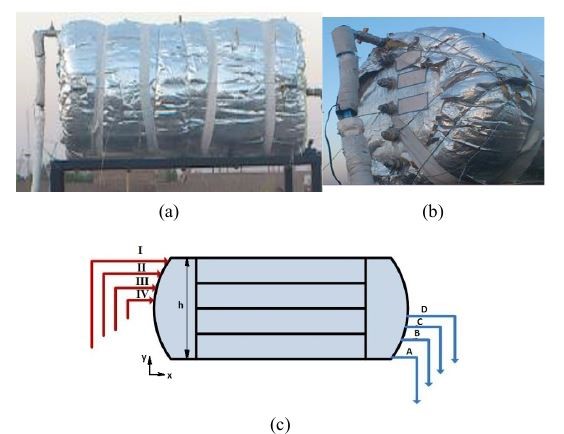
The study investigates heat transfer in a solar water-heater’s reservoir using 29 temperature sensors inside the reservoir and 2 at the inlet and outlet. It examines how different inlet and outlet positions affect temperature distribution to find the optimal configuration.
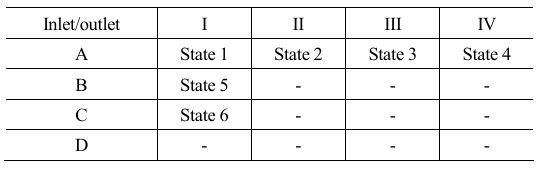
The present study attempts to obtain a suitable design for the inlet and outlet positions of water in the reservoir of a solar collector. It also investigates the inlet/outlet locations on the temperature layers inside the storage tank to achieve the maximum temperature range for subsequent hot water applications.
Solar water heaters use collectors to convert solar energy into heat, which is then absorbed by plates and transferred to fluids in pipes. This heated fluid transfers its energy to another fluid stored in a nearby tank, typically water, for consumption. The experimental system described includes a dual-purpose flat-plate collector (0.94 m x 1.94 m) that uses both air and water, attached to an insulated reservoir. This collector reduces costs by 80% and the required area by 50%, making it highly efficient and suitable for use. It also achieves higher temperatures, with the outlet air temperature being 20% higher than that of simple collectors, making it ideal for water heaters and solar dryers..
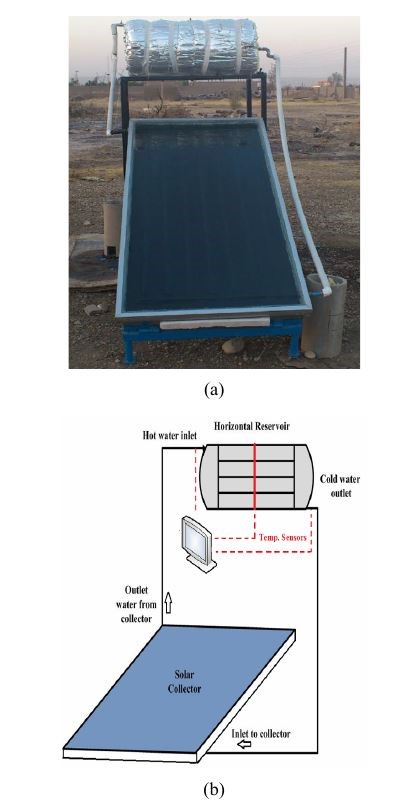
The study found that the efficiency of solar water heaters can be improved by optimizing the positions of the inlet and outlet in the reservoir. These positions influence the mixing and temperature distribution within the reservoir. Among six different configurations tested, the best performance was achieved when the inlet was at position II and the outlet at position B, resulting in a higher temperature range and better thermal efficiency.